

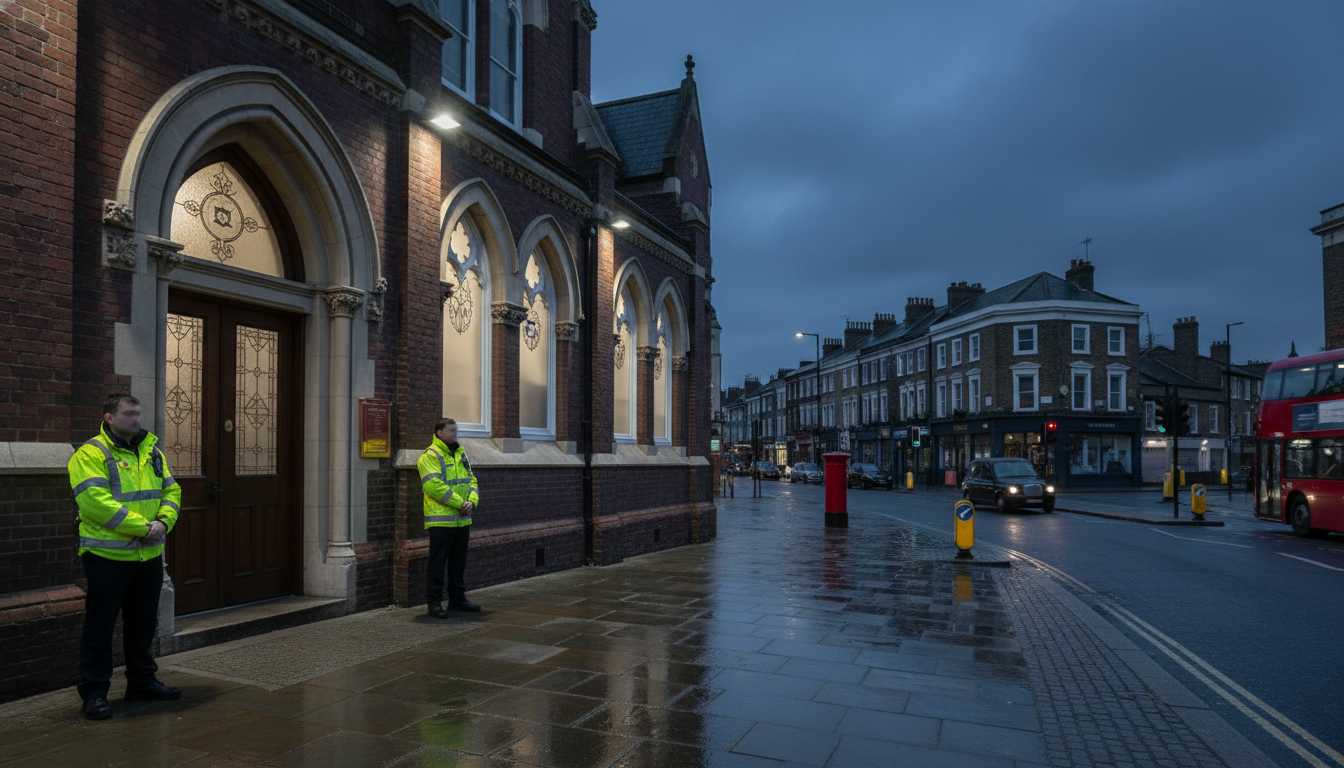


Seven people have been arrested over suspected coordinated arson attacks on Jewish sites in Golders Green and north-west London, with counter-terror officers now running the investigation. According to The Independent, the scale and timing of the incidents have pushed the case straight into the counter-terror bracket — and that changes the conversation for every security professional in the UK.
For door supervisors, close protection officers and security managers, this is not just another news story. It is a signal. Faith venues are moving up the threat register, and the demand for trained, licensed professionals to guard them is growing fast.
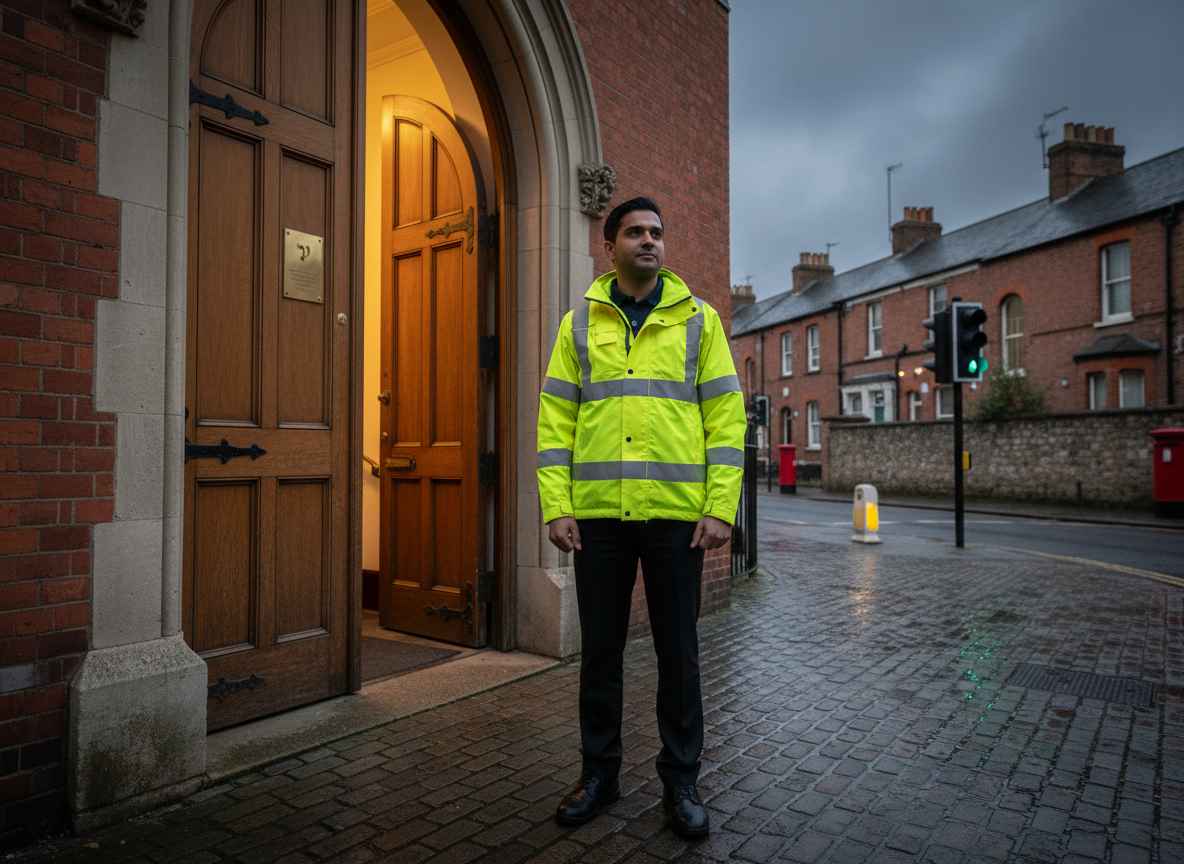
What we know so far
Counter-terror police are leading the investigation into the attacks on Jewish sites in Golders Green and the surrounding area. Seven people have been arrested, according to reporting by The Independent. Officers are treating the incidents as linked — which is why the case has been escalated above standard arson.
No one has been charged at the time of writing. We are not naming any of the arrested individuals.
The Security Minister has publicly condemned the attacks and repeated the Government’s commitment to protecting Jewish communities. That matters, because Ministerial statements tend to travel with money — and money in this sector usually means more guarding contracts at synagogues, schools, community centres and cultural sites.
Why this matters for the security industry
Faith venues have always needed protection. What is changing is who pays for it, how visibly it is deployed, and what standard is expected.
The Community Security Trust (CST) has run volunteer-based protection at Jewish sites for decades, and does excellent work. But after coordinated incidents like this one, trustees and boards start asking a different question: do we need licensed professionals on the door, not just volunteers at the gate?
That question is being asked at mosques, churches and temples too. The pattern after every high-profile attack is the same — demand for paid, SIA-licensed guarding goes up. Martyn’s Law, which places new protective duties on venues, is pushing in the same direction.
Where the work is going to come from
- Synagogues and Jewish schools — often with existing CST relationships but increasingly supplementing with paid security at high-risk times (Shabbat, festivals, funerals).
- Mosques and Islamic centres — funded in part through the Home Office’s Protective Security for Mosques scheme.
- Churches and cathedrals — especially those running events, food banks or public-facing services.
- Community and cultural centres attached to any faith — the soft targets that attackers look for.
The skills that make you the right hire for a faith venue
Guarding a synagogue on a Saturday morning is not the same as working the door at a nightclub. The threat model is different. The community is different. The expectations are different. Here is what faith-sector clients actually want to see.
Conflict management that de-escalates, not escalates
Most incidents at faith venues are not armed attackers. They are disputes, protestors, distressed individuals, or people filming to provoke a reaction. A good door supervisor defuses the situation without creating a clip that ends up on social media.
Your SIA door supervisor training course covers the fundamentals. Faith venues want to see you build on that — ideally with advanced conflict management or mental-health-aware training on top.
Search procedures done properly
Bag searches at a place of worship are sensitive. You are not patting down a stag do. You are dealing with elderly congregants, children, religious items, and sometimes media. You need to search thoroughly and respectfully, and you need to be able to explain what you are doing and why in plain language.
Liaising with counter-terror police
If something does happen, you are the first point of contact for the emergency services. Knowing how to brief a responding officer — location, number of people inside, access points, last known position of any suspect — is a skill. Project Servator awareness and the basics of the ACT (Action Counters Terrorism) training are increasingly expected.
Cultural literacy
This one is underrated. If you are working a synagogue, know what kippah, tallit and Shabbat mean. If you are working a mosque, know what wudu and jummah are. You are not expected to be a theologian. You are expected to be respectful and informed. Clients notice.
What the Government’s statement signals for funding
When a Security Minister publicly names antisemitic attacks as a priority, two things tend to follow: more money into existing protection schemes, and pressure on venues to show they are meeting a higher standard of care. Both of those translate into contracts for licensed security firms.
The Jewish Community Protective Security Grant, administered through CST, already funds guarding and physical security at Jewish sites. Expect scrutiny — and likely expansion — of that budget. The equivalent mosque scheme is likely to see similar attention. Martyn’s Law compliance deadlines are sharpening minds in trustee boardrooms across every faith.
How to approach faith-sector clients
If you are a door supervisor or a small security firm thinking about moving into this space, a few practical pointers.
- Get your paperwork spotless. Faith venues will check your SIA licence, insurance, and references. Sort your SIA licence application or renewal before you even start the conversation.
- Lead with listening. The trustees know their community and their risks better than you do. Ask what has happened before, what their congregants worry about, what their existing volunteer arrangements look like.
- Offer to complement, not replace. Most faith venues have existing volunteer security. The smart pitch is professional support alongside the volunteers, not instead of them.
- Train for the specific threat. Invest in ACT awareness, advanced conflict management, and first aid. Show certificates. Make it easy for a trustee to say yes.
- Be visible and discreet. A congregation does not want to feel like it is in a fortress. The best faith-venue security looks calm, professional and human.
The bigger picture
The Golders Green arrests are a grim reminder that places of worship in the UK are being targeted, and that the response cannot rest on volunteer effort alone. For the professional security industry, this is a moment to step up — with the right training, the right attitude, and the right respect for the communities we are asked to protect.
If you are already licensed and looking for your next contract, faith venues are where serious work is heading. If you are still in training, build the extra skills now. The demand is not going away.