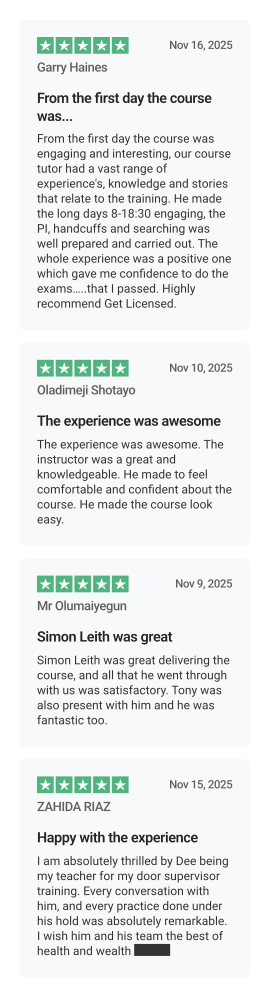
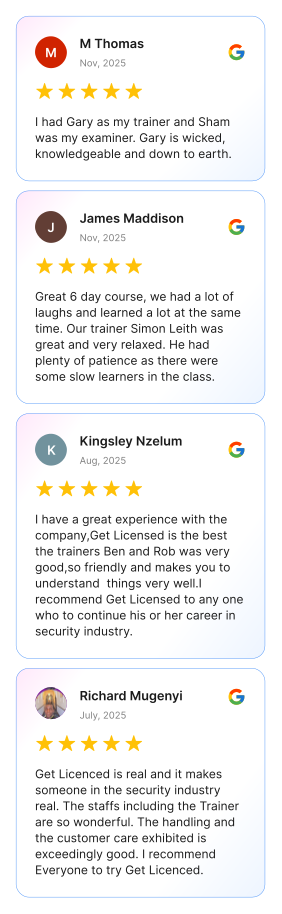
For the last two days, I had Matt as my trainer and he was exceptional, super friendly,
answered questions with precision and expanded his knowledge so that I could fully understand.
Absolutely brilliant Matt, Thank you.
Read more
SIA door supervisor training in 6 days
Door Supervisor Course gets you the SIA Door Supervisor licence most employers ask for. Work venues, events, retail and corporate sites at £12.71 to £25 an hour.
Pay in 30 days or in 3 monthly interest-free instalments. Learn more
Why take the Door Supervisor course?
You need an SIA licence to work security jobs in the UK, and the SIA Door Supervisor licence is the one most employers ask for, because it covers the widest range of security work. This course is how you get it.
Over 6 days, our expert SIA trainers take you from no experience to exam-ready: you'll practise talking down real conflict, get hands-on with safe physical intervention, and make sense of the law behind the job. You sit the exams on the final day, and once you pass, you can apply for your licence and start working paid shifts.
And those shifts are waiting: the industry has severe staff shortages, so licensed door supervisors are in demand across pubs, clubs, events and more. With the SIA Door Supervisor licence, you could work as a:
Door Supervisor
Retail Security Officer
Building Reception Officer
Site Security Guard, no second licence needed
Event Security Officer
Store Detective
And many more roles across the industry
From Door Supervisor training to your first shift in 3 simple steps
Who is this course for?
Door supervisors keep people safe. On busy nights and at big events, they're the reason things stay friendly and everyone gets home fine. Few jobs let you make that kind of difference from day one.
If you want work with real responsibility, where people trust you to handle the moments that matter, this course is where it starts.
The role asks you to:
Take responsibility for people's safety
Read the room and step in early
Stay calm when everyone around you isn't
Defuse trouble with just your words
Be the one people count on when it matters
Door Supervisor vs Security Guard: what's the difference?
Door Supervisor licence
Covers bothPubs, clubs and venues serving alcohol
Events and festivals
All standard guarding work — sites, retail, corporate
Security Guard licence
Guarding work only — sites, retail, corporate
- × Not valid for venues that serve alcohol
If you want to work where alcohol is served, the law requires a Door Supervisor licence. That flexibility is why most employers hire door supervisors over security guards.
It also gives your career more room to grow: door work builds exactly what employers promote for, like reading people, handling pressure and running a team on a busy night. Experienced door supervisors step up to head door and site supervisor roles, move into event security management, or use the licence as the base for close protection work and running their own security company.
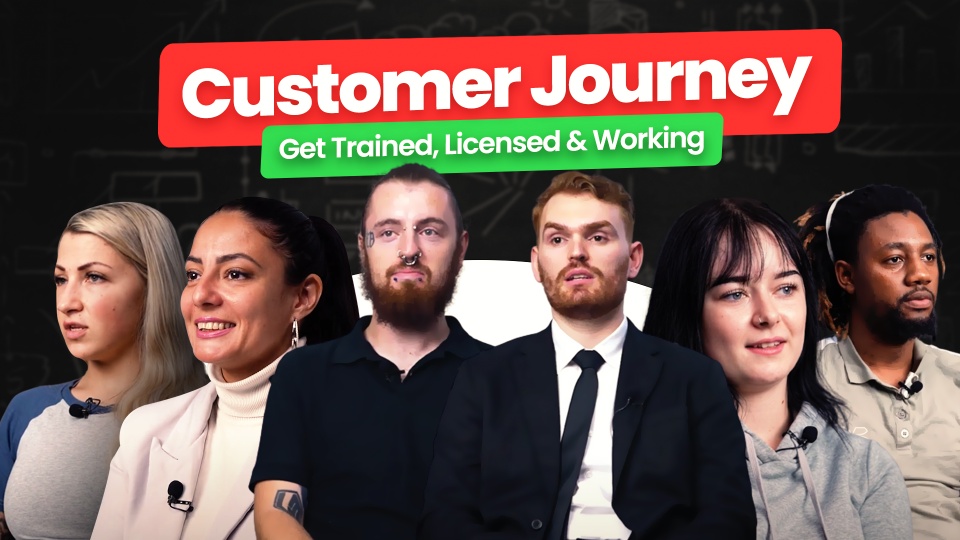
Wondering what it's like working in the security industry?
Hear from our past customers how they're enjoying their new security careers.
What the Door Supervisor course covers
Working in the Private Security Industry
The law, your powers, your responsibilities, plus fire safety, terror threat awareness and emergency procedure.
Working as a Door Supervisor
Licensing law, searches, arrest protocols, drugs awareness. The venue runs safe because you know this.
Conflict Management
Reading a room, stepping in early, talking trouble down. Most nights your voice is the only tool you need.
Physical Intervention
For when talking stops working. Safe, non-harmful leverage techniques, so everyone, you included, goes home safe.
Exams and Practical Assessments
Multiple-choice exams plus a short practical. 95% pass first time: free mock exams all week help you get there.
Skills you keep for life
Confidence, conflict skills, calm under pressure. Trained for the door, useful everywhere.
How the Door Supervisor course exams work
What you need before you book
Before booking your SIA Door Supervisor training, you must meet the SIA criteria:
Age: you must be 18 or older.
Right to work: you must have the legal right to work in the UK.
English skills: you need a basic understanding of English — reading, writing, speaking and listening.
First Aid: you need a valid First Aid certificate (like EFAW) with at least 12 months of validity left on it. Don't have one? Add our 1-day First Aid course directly to your booking.
Find a Door Supervisor course near you
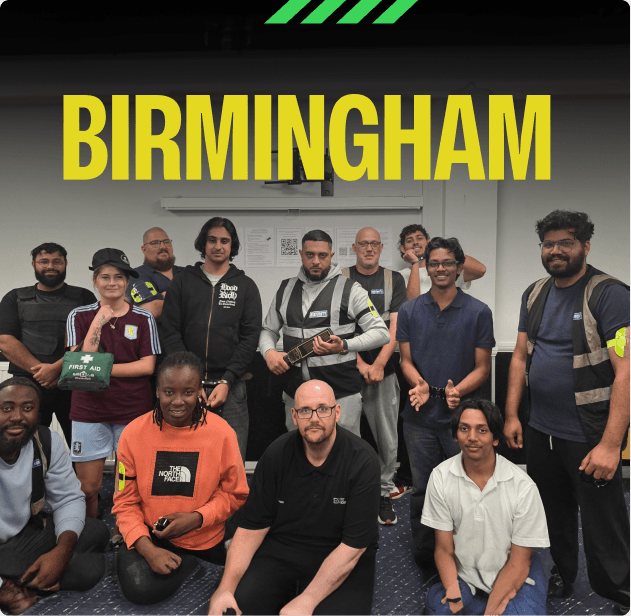
Our popular locations
How to get your Door Supervisor licence
Pass the course, then apply for your licence on the SIA's website. The SIA charges a £204 application fee, and the licence is valid for 3 years. Once your checks are in progress, the SIA typically takes 2 to 4 weeks to reach a decision.
Read the step-by-step SIA licence guide
Not ready to book yet?
Take the free starter pack and career guide. What the job pays city by city, how the licence works, free mock exams, and how people get their first shift. Straight to your inbox.
Real stories from real people
5,429
people training with us this week
"Very informative at all times helping to keep confidence of people of age not feel out of place. Good demonstration and clear communication and even exam reminded me of my a levels years ago. Well done"
Our graduates work at
Not sure where to start?
We'll clear it up!
Door supervision covers far more than standing on a door. On a typical shift, a door supervisor will:
- Control entry: checking IDs, managing queues, enforcing venue capacity and refusing entry where licensing law requires it.
- Manage conflict: spotting trouble early and talking it down before it grows. De-escalation is the core skill of the job.
- Protect people: looking after vulnerable customers, dealing with medical incidents and handling emergencies like fire evacuations.
- Work with others: venue management, CCTV operators and police, to keep the night running safely.
Because door supervisors work at licensed premises, they carry more legal responsibility than a standard security guard, and their licence covers a wider range of work. The 6-day SIA Door Supervisor course from Get Licensed is the qualification that starts the licence process: find a course date near you.
Becoming a bouncer in the UK takes 3 things:
- Be 18 or over with the right to work in the UK.
- Pass the 6-day Door Supervisor course, the SIA-approved training behind the licence.
- Apply to the SIA for the licence itself: £204, valid 3 years.
The old image of the job is out of date. Since the Private Security Industry Act 2001, door work has been a regulated profession: every door supervisor is trained in licensing law, conflict management and safe physical intervention, and works under a licence that employers can verify. Modern door staff are assessed on judgment, not muscle, which is why the pay, the career ladder and the respect for the role have all improved. See what the training covers.
- Door Supervisor licence: covers general security guarding and door supervision at licensed venues. The training includes conflict management and physical intervention.
- Security Guard licence: covers guarding work only: retail security, corporate buildings, warehouses, construction sites. No licensed premises.
Both are front line SIA licences, the courses take a similar amount of time, and the SIA licence fee is the same £204. Because the Door Supervisor licence is the broader of the two, most learners and many employers prefer it: one licence, both careers, more shifts to choose from.
See the full Door Supervisor vs Security Guard comparison, or compare the Security Guard course directly. One thing neither licence covers is CCTV operation: control room work needs the separate SIA CCTV licence.
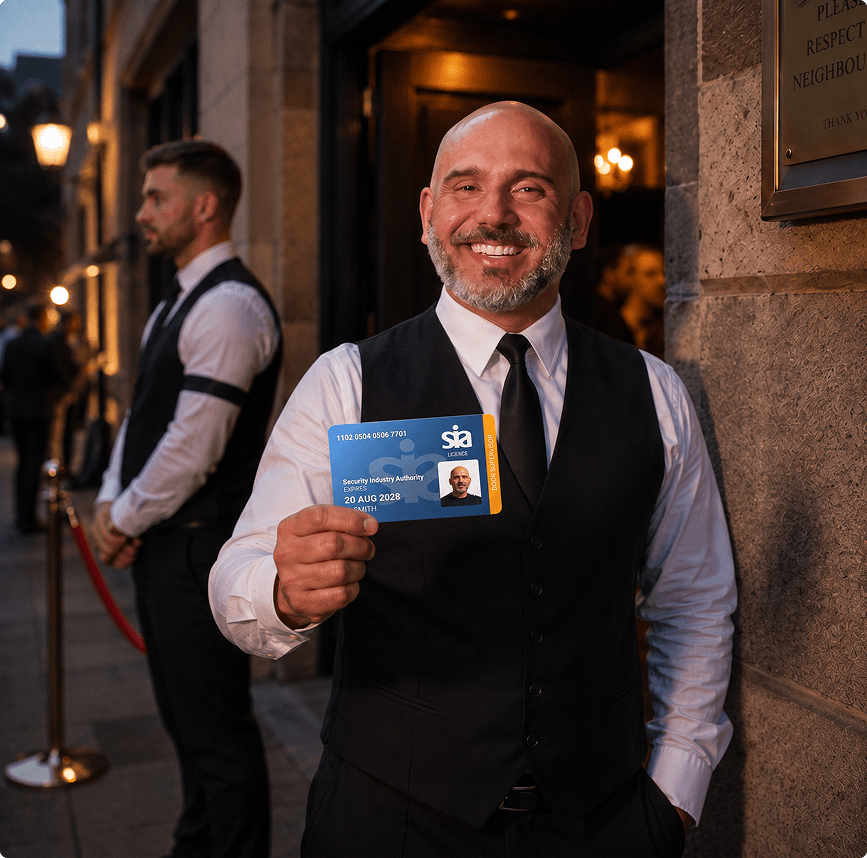
The SIA (Security Industry Authority) regulates the UK's private security industry. The Door Supervisor licence is a front line licence: you wear your SIA badge visibly on shift, and anyone can verify it on the SIA's public register. Getting licensed takes 3 steps:
- Pass the 6-day course: the SIA licence-linked qualification, with exams on the final day and results the same day.
- Apply to the SIA: the licence costs £204. Get Licensed guides you through the application.
- Receive your licence: valid for 3 years, anywhere in England, Scotland, Wales and Northern Ireland.
The step-by-step SIA licence guide covers the full process, documents and timelines.
- Days 1 to 2 · Working in the Private Security Industry: the law, your powers and responsibilities, fire safety, terror threat awareness and emergency procedure.
- Day 3 · Working as a Door Supervisor: licensing law, search procedures, arrest protocols and drugs awareness.
- Day 4 · Conflict Management: reading a room, stepping in early, talking trouble down.
- Day 5 · Physical Intervention: safe, non-harmful leverage techniques, taught hands-on.
- Day 6 · Exams and practical assessment: 4 multiple-choice exams plus a short practical demo, with results the same day.
Free mock exams run all week, so by day 6 you've already seen the style of every question. View the full Door Supervisor syllabus for the unit-by-unit detail.
The classroom requirement doesn't have to mean a long commute. Get Licensed runs the Door Supervisor course at training centres in 100+ locations across the UK, so there's almost certainly one near you: find your nearest centre and dates.
If flexible study matters to you, two related routes help:
- The SIA CCTV course offers a virtual classroom option for 2 of its 3 days.
- The Door Supervisor Top-Up Refresher, taken when you renew after 3 years, includes e-learning you complete at home before its 2 classroom days.
- Age: you must be 18 or older. There's no upper age limit: what matters is meeting the standard, not your birthday.
- Right to work: you must have the legal right to work in the UK, proven with ID when you apply for the licence.
- English: a basic standard of reading, writing, speaking and listening. The exams are multiple choice and written in plain English.
- First aid: a valid Emergency First Aid at Work certificate with at least 12 months of validity left, before the course starts.
No formal qualifications are needed: no GCSEs, no security experience, no fitness test. The course assumes you're starting from zero and trains you to the standard.
Separately, the SIA checks your criminal record when you apply for the licence itself. A record isn't an automatic no: the SIA weighs how serious and how recent it was. Check where you stand with the free criminal record checker before you book.
- Already have one? Check it has at least 12 months of validity left on day 1 of your course. EFAW, full First Aid at Work (FAW) or an equivalent regulated qualification all count.
- Don't have one? Add the 1-day Emergency First Aid at Work course directly to your Door Supervisor booking and complete it before the course begins. Same booking, one plan.
Keep the certificate after the course too: you'll show it to your trainer, and a current first aid qualification makes you more employable once you're working the door.
- Photo ID: a passport or UK driving licence is the safe choice.
- First Aid certificate: EFAW or higher, with at least 12 months of validity left.
- Comfortable clothes: day 5 is physical intervention training, so dress to move. Flat shoes, nothing restrictive.
- Something to take notes with: 6 days of material feeds 4 exams, and the learners who make notes tend to walk the mock exams.
Arrive a little early on day 1 for registration. Your booking confirmation from Get Licensed covers anything centre-specific, like parking or lunch arrangements.
- Course fee: from £259.99 inc. VAT. Covers all 6 days of training, your exams and free mock exams through the week. No hidden extras.
- SIA licence fee: £204, paid directly to the SIA when you apply. It covers your licence for 3 years, which works out at £68 a year.
- First aid, if you need it: a 1-day EFAW course can be added to your booking if your certificate has expired or you've never held one.
Set against starting pay of £12.71 to £15 per hour, most door supervisors earn the whole outlay back within their first couple of weeks of shifts. Check live prices for your nearest centre.
- Working in the Private Security Industry: 72 questions, pass mark 51 (70%).
- Working as a Door Supervisor: 50 questions, pass mark 35 (70%).
- Conflict Management: 20 questions, pass mark 14 (70%).
- Physical Intervention: 30 questions, pass mark 24 (80%), plus a practical demo assessed by your trainer.
Pass all 4 and you hold the Level 2 qualification for door supervision that the SIA requires for the licence. Results come the same day, so you can start your licence application that evening. See the full exam breakdown, or preview the question style with free Door Supervisor mock tests.
The numbers are on your side for a reason. Every exam is multiple choice, the questions are scenario-based (what would you do if...), and the course teaches exactly what comes up: your trainer covers the material, then you practise with free mock exams all week, so nothing on day 6 is a surprise.
The learners who struggle are almost always the ones who miss sessions. Attend all 6 days, ask questions when something's unclear, and do the mocks. You can even try the free Door Supervisor mock tests right now, before you book, to see exactly what the real questions look like.
Failing one unit doesn't wipe out the ones you passed: those results stand, and you rebook just the resit with your training centre. Most resits are a single multiple-choice paper, so the second attempt is a much smaller day than the first.
Before the resit, go back over the unit with the free mock exams: they're the fastest way to find the gap that caught you. Get Licensed supports you through your next attempt, and with a 95% first-time pass rate, needing a resit at all puts you in a small minority.
- Apply: on the SIA's website. You'll create an SIA online account, confirm your identity and pay the £204 licence fee. The licence is valid for 3 years.
- Wait: once your identity and criminal record checks are in progress, the SIA typically takes ~2 to 4 weeks to reach a decision.
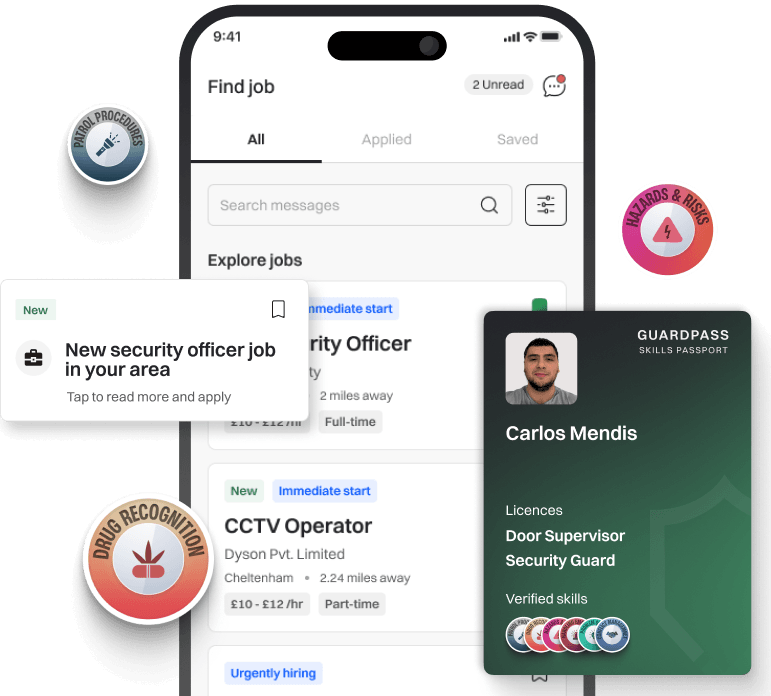
- Work: find door supervisor jobs and security shifts through GuardPass, the all-in-one app for security workers.
Most learners are job ready within 3 to 6 weeks of starting the course: training week, application, licence, first shift. The SIA licence guide covers every step in detail.
What keeps it moving:
- Apply immediately: exam results arrive the same day as your exams, so there's no reason to wait.
- Get documents right first time: incorrect or missing ID is the most common cause of delay. The step-by-step SIA licence guide lists exactly what the SIA accepts.
- Know your record: if you have a criminal record, checks can take longer. The free criminal record checker tells you where you stand before you apply.
End to end, most people go from booking the course to being job ready in 3 to 6 weeks.
But the waiting weeks don't have to be dead time. Use them to get job-ready, so your first shift lands days after your licence does:
- Apply for roles now: browse door supervisor and security guard jobs on GuardPass. Many employers are happy to interview while your application is with the SIA.
- Line up interviews: tell employers your licence is in progress and when you expect it. It shows organisation, and venues plan rotas weeks ahead anyway.
- Scout your patch: know the venues, events companies and security firms hiring near you, and what they pay.
Handled this way, the SIA's ~2 to 4 week processing window becomes your job hunt, not a delay.
Top-up training exists because the SIA refreshed its qualifications: the refresher updates your physical intervention skills and covers what's changed since you first trained, including counter-terrorism awareness.
- Book before your licence expires: renewing on time means no gap in your right to work, and no lost shifts.
- E-learning first: Get Licensed sends the e-learning videos when you book. Finish them before day 1.
- 2 days in the classroom: then apply for renewal, with results the same day and the same £204 SIA fee for the next 3 years.
What moves you up the range:
- Experience: venues pay more for people who've proven they can run a door calmly. Your first year is your apprenticeship; your rate follows your reputation.
- The venue and role: premium venues, VIP events and head door supervisor positions sit at the top of the range.
- Extra qualifications: adding CCTV widens the shifts you can take, and stepping up to Close Protection moves you into a different pay bracket altogether.
Because the Door Supervisor licence also covers general guarding work, you can stack daytime security shifts alongside door work: two income streams, one licence. See the roles the licence unlocks and what each typically pays.
- Pubs, bars and nightclubs: the classic door work, evenings and weekends.
- Music festivals, stadiums and events: seasonal, high-volume work, especially through summer.
- Hotels and hospitality: front-of-house security with a customer-service face.
- Retail stores and shopping centres: daytime shifts, loss prevention.
- Corporate offices and reception desks: steady weekday hours.
That flexibility is the licence's real value: day or night, weekday or weekend, employed or freelance, you choose the mix. See the security roles the licence unlocks, including typical pay for each, or browse live vacancies on GuardPass.
Daytime and weekend options include retail security, corporate front-of-house, stadium and festival shifts, and hotel work. The calendar helps as well: summer festival season and the December party season bring waves of well-paid event shifts, while retail and corporate work runs steady all year.
Many door supervisors build a mix: guarding shifts in the day, door work at night, or weekend-only shifts around another job or studies. Plenty start part-time and go full-time once the shifts stack up. You choose the pattern; the licence covers all of it. Browse current door supervisor and security guard shifts on GuardPass to see what's running near you.

There's a structural reason for the demand: licensed venues need female staff to search female customers, so women with a Door Supervisor licence are consistently sought after for club doors, festivals and event work. Many venues struggle to run a fully compliant door team without one.
Beyond searches, the job rewards what the training actually teaches: reading situations, calming people down and protecting vulnerable customers. Ask anyone who runs doors: a good communicator defuses more trouble than a big frame ever will. If you're a woman considering security work, this is one of the most in-demand routes into the industry, and live vacancies are easy to browse on GuardPass.
The physical intervention training uses leverage and technique, not brute strength, and it's designed so anyone who meets the course requirements can pass the assessment safely. There's no fitness test and no size requirement anywhere in the SIA's rules.
What employers actually look for: staying calm under pressure, communicating clearly, showing up reliably and making good decisions at 2am. Most nights, your voice is the only tool you need, which is why the course spends a full day on conflict management.
The SIA publishes the criteria it uses, and the pattern is simple: recent or violence-related offences weigh heaviest, older and minor ones fade. Plenty of licensed door supervisors have something on their record.
Do the check in the right order: use the free criminal record checker before booking, so you know your position before you pay for the course or the £204 licence fee. If your result looks borderline, Get Licensed's team is available 24/7 on 0207 078 7259 to talk it through before you commit.
Most new door supervisors start employed, either directly by a venue or through a security firm, so cover is handled from day one: just confirm with the employer exactly what their policy covers before your first shift, especially for physical intervention incidents.
If you go self-employed later (some experienced door supervisors contract directly with venues at higher rates), public liability insurance becomes your responsibility, and venues will usually ask for proof of it before offering the work. Factor the premium into your rate when you price your shifts. Freelance and employed roles alike are listed on GuardPass, so you can compare both routes before deciding.
Use the course finder to see dates and venues near you: pick your centre, pick your date, and you'll see live prices for each option before you commit. Dates run year-round, so if this week doesn't work, next week will.
Book the centre that's easiest to reach for 6 consecutive days: turning up to every session is the single biggest factor in the 95% first-time pass rate.
- Online: pick your centre, pick your date, done. Your place is confirmed straight away, so you can plan your week around it.
- Phone: the team is available 24/7 if you'd rather talk it through first, including questions about requirements or your criminal record.
- Spread the cost: instalment plans are available at checkout, so the course fee doesn't have to come out of one payday.
Need First Aid too? Add the 1-day EFAW course to the same booking and get both sorted in one plan. From booking to job ready is typically 3 to 6 weeks, so the sooner the date's in the diary, the sooner the first shift.
Explore more courses
Where you can take the Door Supervisor course
We run Door Supervisor training at training centres across the UK. Pick your city for local dates, venues and prices.
Take the first step. Become a Door Supervisor.
Step into a career where people count on you and the skills keep climbing. It starts with 6 days of training.
View dates & prices