Trustpilot
POPULAR COURSES


Download GuardPass App



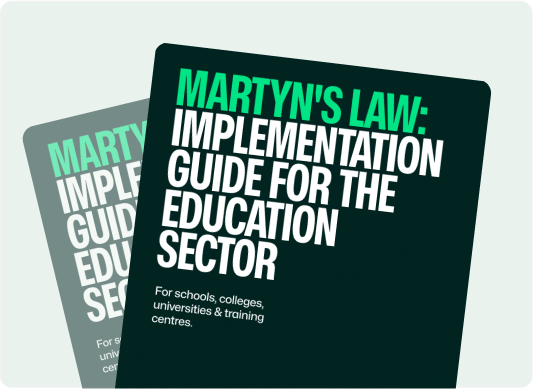
Martyn's Law is here. Are you prepared?
The Terrorism (Protection of Premises) Act 2025 is now law. Whether you run a venue, manage a security team, or work as a security officer, here's what changes before enforcement begins.

What is Martyn's Law?
Legislation requiring venues and events to take proportionate steps to protect the public from terrorism — proportionate, not perfect.
Named in memory of Martyn Hett
Martyn was one of the 22 people killed in the 2017 Manchester Arena attack. The Act carries his name in recognition of his mother Figen Murray's campaign to make public venues safer.

The Protect Duty
Venues must put procedures in place to reduce harm in the event of an attack.

200+ capacity
Applies to venues and events expecting 200 or more people at any one time.

SIA enforced
The Security Industry Authority will assess, audit, and enforce compliance.
No consultants needed
The Act is designed so venues can comply using existing staff and free guidance.
Standard Duty
Lighter procedural duties. Basic evacuation, invacuation, lockdown, and communication plans.
Enhanced Duty
Documented plans, named responsible person, regular training, and risk assessment available for SIA inspection.
Key dates and developments
Nine years from the Manchester Arena attack to enforcement. The path from grief to law.

Hover or tap any event for detail
A suicide bombing at the Manchester Arena killed 22 people and injured hundreds more following an Ariana Grande concert — the deadliest terrorist attack in the UK since 7/7.
The government launched a public consultation on a proposed Protect Duty, asking venues and the public whether mandatory security measures should be required at publicly accessible locations.
The Terrorism (Protection of Premises) Bill was formally introduced to Parliament, setting out the legislative framework for what would become Martyn's Law.
The Terrorism (Protection of Premises) Act 2025 received Royal Assent, becoming law. The Act is widely known as Martyn's Law in honour of Martyn Hett, who was killed in the Manchester Arena attack.
The SIA published its Section 27 guidance document, providing detailed advice on how venues should interpret and implement their obligations under Martyn's Law.
The SIA opened a public consultation on its Section 12 draft enforcement guidance, inviting venue operators and the public to shape how the law will be enforced in practice.
Full enforcement of Martyn's Law is expected to begin. From this point, venues that fail to comply with their Standard or Enhanced Tier obligations face formal regulatory action by the SIA.
Shape how Martyn's Law will be enforced.
The SIA is seeking input from venue operators on its draft enforcement guidance. Your operational reality should inform the rules.
How should you prepare?
Choose your role. The duties differ depending on whether you set the policy or carry it out.
Determine your tier
Standard Duty (200–799) or Enhanced Duty (800+). Capacity, not occupancy on a typical night.
Read statutory guidance
Section 27 guidance (April 2026) explains scope and requirements in plain English.
Respond to consultation
Open until 12 June 2026 — your input shapes how the SIA will enforce the Act.
Develop procedures
Evacuation, invacuation, lockdown, and communication plans — written, tested, owned.
Train your staff
Site-specific training is required even for SIA-licensed staff. Generic doesn't count.
Notify the SIA
Register through the notification portal when it opens ahead of enforcement.
What this means for security workers
The legal duty falls on venue operators — not individual workers. But as a frontline professional, you will see changes in how venues operate.
The duty is on your employer
Venue operators are the 'responsible person' under the Act. Your role is to follow the procedures they put in place.
Your SIA training covers the fundamentals
Counter-terrorism awareness, recognising suspicious behaviour, and emergency response are part of your licence-linked training.
Expect new procedures at work
Clearer evacuation plans, bag search protocols, updated communication chains, and more regular briefings.
Site-specific training will be required
Even with an SIA licence, you will need additional instruction on each venue's specific procedures.
Does Martyn's Law apply to your venue?
03 quick questions. General guidance only — refer to statutory guidance for a definitive assessment.
Compliance guides by industry
The Act applies the same principles everywhere. The risks, layouts, and procedures look different sector to sector.

Education
Schools, colleges, universities

Hospitality
Pubs, hotels, cafes, restaurants

Entertainment
Venues, theatres, event spaces

Retail
Shops, malls, supermarkets

Sports & Recreation
Stadiums, gyms, leisure sites

Healthcare
Hospitals, clinics, medical sites

Places of Worship
Faith spaces and community centres

Local Government
Council offices and civic centres
A voluntary qualification for managers.
The Competent Person in the Workplace (Level 3), developed by Counter Terrorism
Policing & SFJ Awards, complements Martyn's Law but is not required for compliance.
News and updates
Developments, insights, and guidance on Martyn's Law.
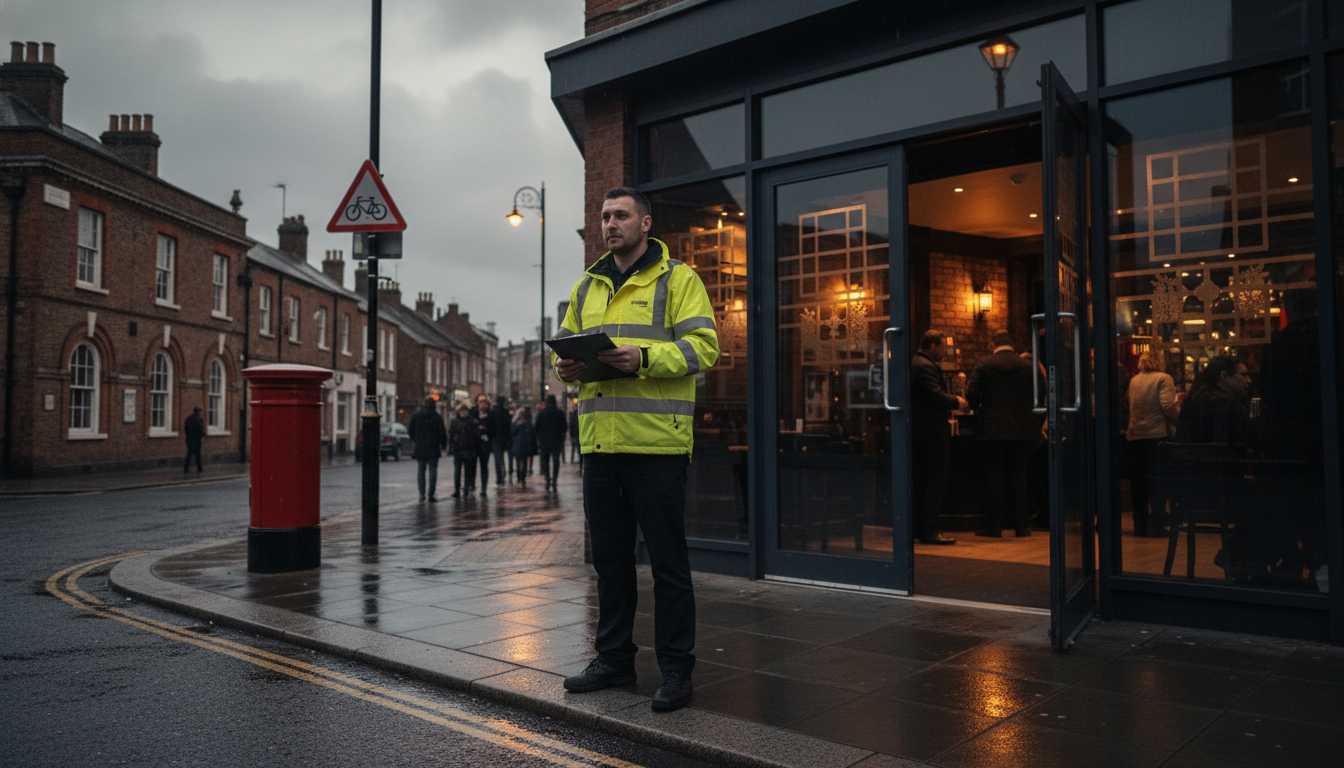
Martyn’s Law Statutory Guidance Is Live — What Every Venue Security Team Must Do Now
21 May 2026
Martyn's Law Timeline: Every Key Date From Royal Assent to Enforcement
17 April 2026
Martyn's Law Is Now an Act: What Security Professionals Need to Know in 2026
3 April 2026
CPIW Qualification: How Employers Should Prepare for Martyn’s Law Compliance
25 Jun 2025
Martyn’s Law. (The Protect Duty): what you need to know.
22 Mar 2023Not sure where to start?
We'll clear it up!


Find work, try mock tests and book courses from
the UK’s #1 app for security professionals